
Endangered mammals find homes at Lofftwen
I can’t believe it’s March 2026 already. I’m still catching up with the end of 2025, and what a second half of the year it was for the Lofftwen project. It started with a Powys biodiversity blitz (a big thank you to Katherine for organising) where a mixture of around 30 enthusiastic amateur and professional ecologists descended onto Lofftwen. We are still awaiting the final species list, but the star of the show was the possible identification of water vole activity, later confirmed officially by Phil Morgan, Powys County Recorder for Mammals.
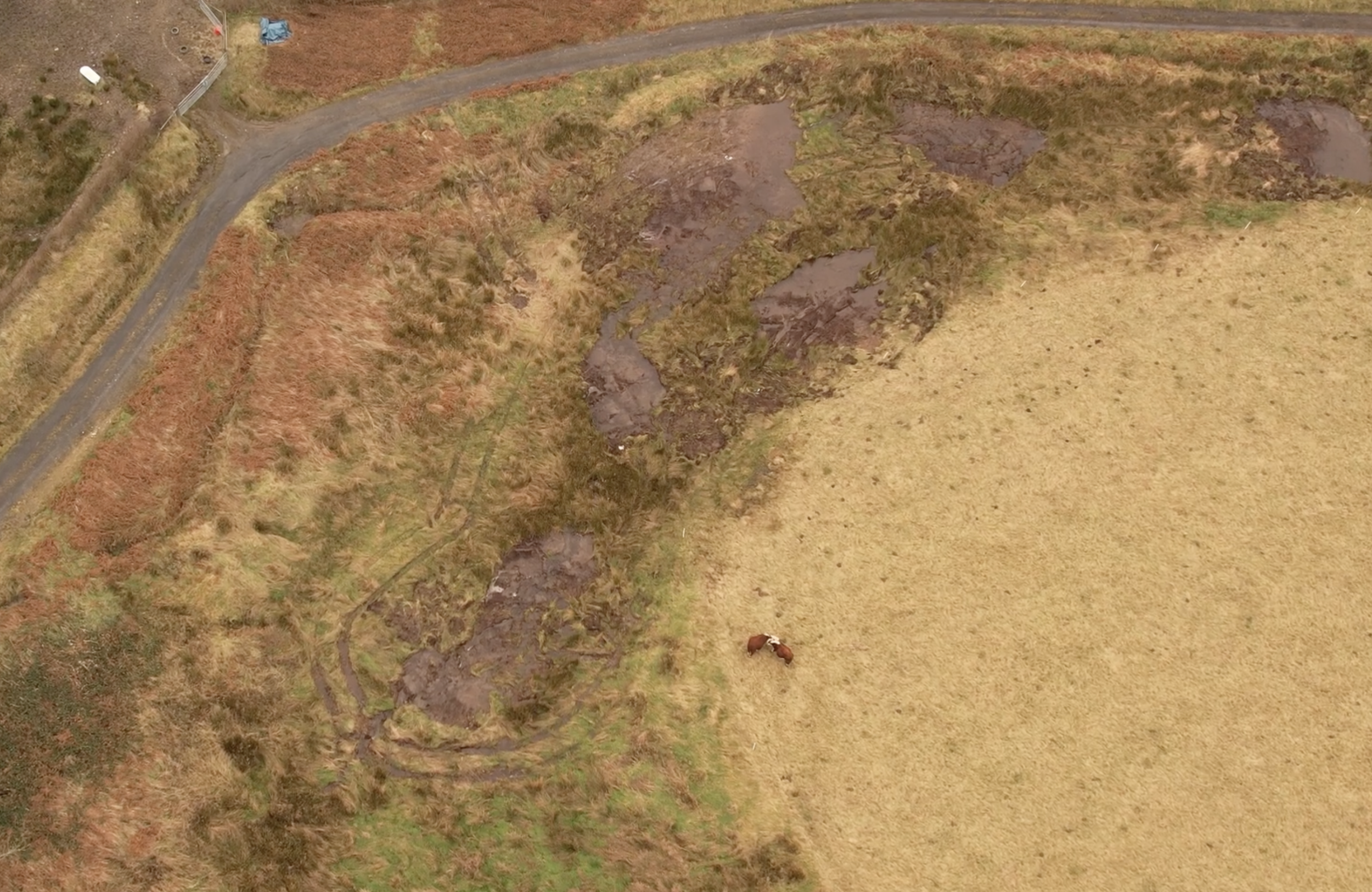
Restoring wetland works at Lofftwen
A first phase of wetland works we hope will eventually provide habitat for the likes of water voles and wading birds throughout Lofftwen.
Water vole populations have experienced a dramatic collapse in recent decades, their numbers estimated in 2024 to be potentially as low as 53,000 individuals, shocking numbers for what was once one of the UK’s most common mammals. Water voles are brilliant mini ecosystem engineers, their extensive burrow networks and constant vegetation management creating a rich diversity of habitats used by hundreds of other species. In the right numbers, they are also an essential prey species for larger birds and mammals.
It is for these reasons that a couple of years ago we started investigating the potential for reintroducing water voles to Lofftwen. This discovery meant that was no longer necessary, and we could focus instead on improving the extent and quality of habitat we can provide. We have since identified a second colony of water voles, and it is hoped there are many others in the myriads of reestablishing wetland habitats at Lofftwen.
The second major wildlife discovery came later in 2025. In the middle part of November, a single wildlife camera picked up a streak of fur, bright eyes and fluffy tail crossing its path. The camera had been expertly placed by the aforementioned Phil Morgan who had identified the potential for pine marten habitat at Lofftwen during a walkabout but had warned it was very unlikely we would find anything interesting this time of year. But here it was in all its pixelated glory. The sense of elation was indescribable.
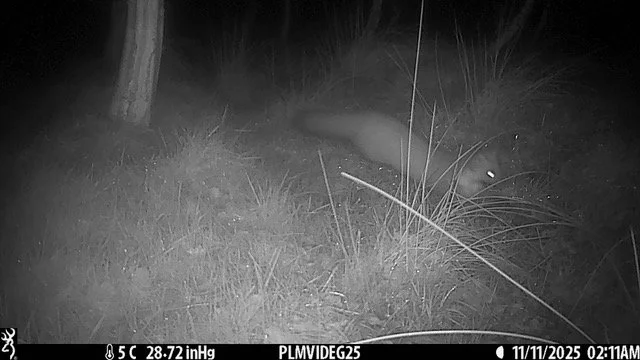
The first ever pine marten captured on camera at Lofftwen
This pine marten is thought to be a descendent of a release project led by Vincent Wildlife Trust about the same time the first trees were planted at Lofftwen.
Pine martens were considered largely extinct in Wales by the early 2000s, although it is now thought small populations were clinging on in more remote areas. The Vincent Wildlife Trust led a pine marten population reinforcement project between 2015-2017 translocating pine martens from Scotland to Wales resulting in the reestablishment of a viable population that has been slowly expanding ever since. It is very likely that our pine marten is a descendent of this project, which seems fitting as our new woodland was planted in 2018.
Much like the story of water vole numbers, pine marten is thought to have once been the second most common carnivore across Britain but is now the second rarest after the wildcat. The discovery of water voles and pine marten at Lofftwen are valuable reminders of both how far nature has collapsed under our collective watch, but also how quickly it can recover if given a helping hand. In the constant barrage of bad news, it’s hard not to feel helpless. But as the most powerful mammals on the planet, we all have the ability to contribute positively to this process of recovery, however large or small. This is a key lesson I will be taking into the remainder of 2026.